
Diabetes is one of the most common health conditions in the United States, affecting more than 38.4 million Americans, including 8.7 million who have undiagnosed diabetes, according to the CDC.
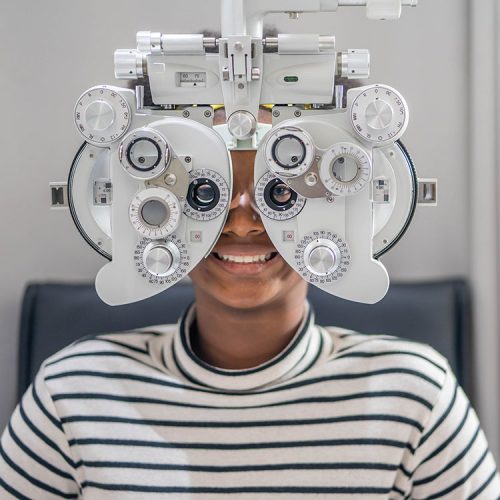
A routine eye exam can play an important role in helping to diagnose the condition for your Medicare Advantage members.
Diabetes Affects More Than One-Quarter of Older Americans
More than one-quarter of those age 65 and older have diabetes, according to the CDC’s 2020 National Diabetes Statistics Report. On top of that, another 27.2 million older adults have prediabetes. For the one in 10 Americans diagnosed with diabetes, almost 90% were overweight; nearly 31.9% were physically inactive, and 22.1% were smokers. Addressing diabetes as soon as possible can prevent or delay many other related health problems.
Eye Exams Can Help Detect the Disease
Each year, about 1.5 million Americans are diagnosed with diabetes. Eye exams are considered one of the least invasive, most cost-effective ways of looking inside a person’s body to get a picture of their overall health, and 20% of people said they learned they had diabetes thanks to an eye exam.
The American Optometric Association recommends that Americans age 60 and older receive an annual eye exam and that people get their eyes checked immediately if they experience a change in their vision.
Diabetes Drives up Healthcare Costs
The prevalence of diabetes and prediabetes can be a concern for health plan managers, as the average medical expenditures for people diagnosed with diabetes are about 2.3 times higher than for those who don’t have diabetes. The disease accounts for $245.5 billion in annual healthcare utilization.
Diabetes Can Lead to Other Conditions
For someone already diagnosed with diabetes, having a comprehensive eye exam with their eyes dilated is important as it can help diagnose diabetic retinopathy, according to the National Institutes of Health.
Diabetic retinopathy affects the blood vessels in a person’s retina and can cause vision loss and blindness. It can initially be asymptomatic, but if it’s detected early, measures can be taken to help protect the person’s vision. In addition, people who have diabetes are two to five times more likely to develop cataracts and are more likely to develop them at a younger age.