
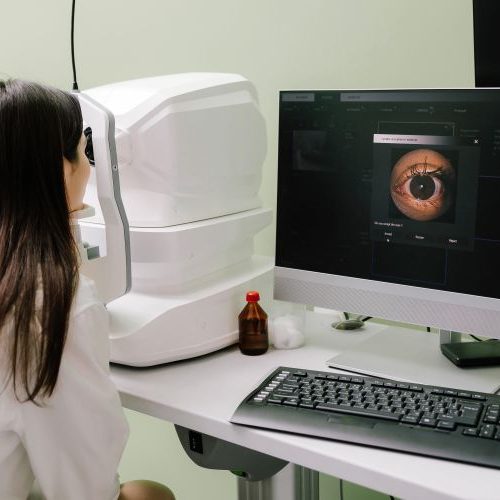
Not all eye exams are created equal. Two methods of examining the back of your eye — retinal imaging and dilation exam — can help detect diseases and even uncover signs of serious health conditions like diabetes, high blood pressure, and stroke.
Understanding the difference helps you make informed choices about your care.
What’s Dilation?
Dilation exam is the gold standard for a full eye health check. Your doctor uses eye drops to widen your pupils, called dilation, allowing a complete view of the retina and optic nerve.
- Allows deeper examination of internal eye structures
- Can reveal signs of systemic diseases like diabetes, hypertension, and autoimmune conditions
- Will cause temporary light sensitivity or blurry vision for a few hours, so patients should be informed so that they can have a friend or family member escort them post-exam
Dilation offers the most thorough assessment of your eye and overall health and is particularly essential for high-risk patients.
What’s Retinal Imaging?
Retinal imaging uses a special camera to take high-resolution pictures of the back of your eye (the retina). These images help your eye doctor spot signs of eye disease — often before symptoms appear.
- Quick and non-invasive
- No eye drops required
- Helps detect conditions like glaucoma, macular degeneration, and diabetic retinopathy
While retinal imaging is often not part of a comprehensive eye exam, it’s a valuable option if you’re unable to be dilated but still want a non-invasive check of your retinal health.
Dilation Offers the Most Complete View
Both retinal imaging and dilation exams are valuable, but dilation offers the most complete and thorough exam. It’s the best choice for early detection and long-term health.
Always talk to your eye doctor about which eye exam is right for you — your age, health history, and risk factors all play a role in choosing the best approach.
Quote From Our Chief Clinical Officer
“Retinal imaging captures snapshots of your eye, while dilation provides the full picture. Together, they can help keep your eyes healthy.”
— Neelam Gor, MD, Chief Clinical Officer, Versant Health
Eye Exams Are for Everyone
From kids spending hours on screens to adults managing chronic health conditions, regular eye exams protect both vision and overall health. Schedule your eye exam and have a discussion with your eye doctor to learn about the best option for you. Do you have Davis Vision or Superior Vision? Go here to find a provider near you.
Sources